Hardwood Floors in Murfreesboro, TN
Hardwood floors last for decades when the subfloor is sound and the wood is allowed to settle to the house before installation. That preparation matters more than the species.
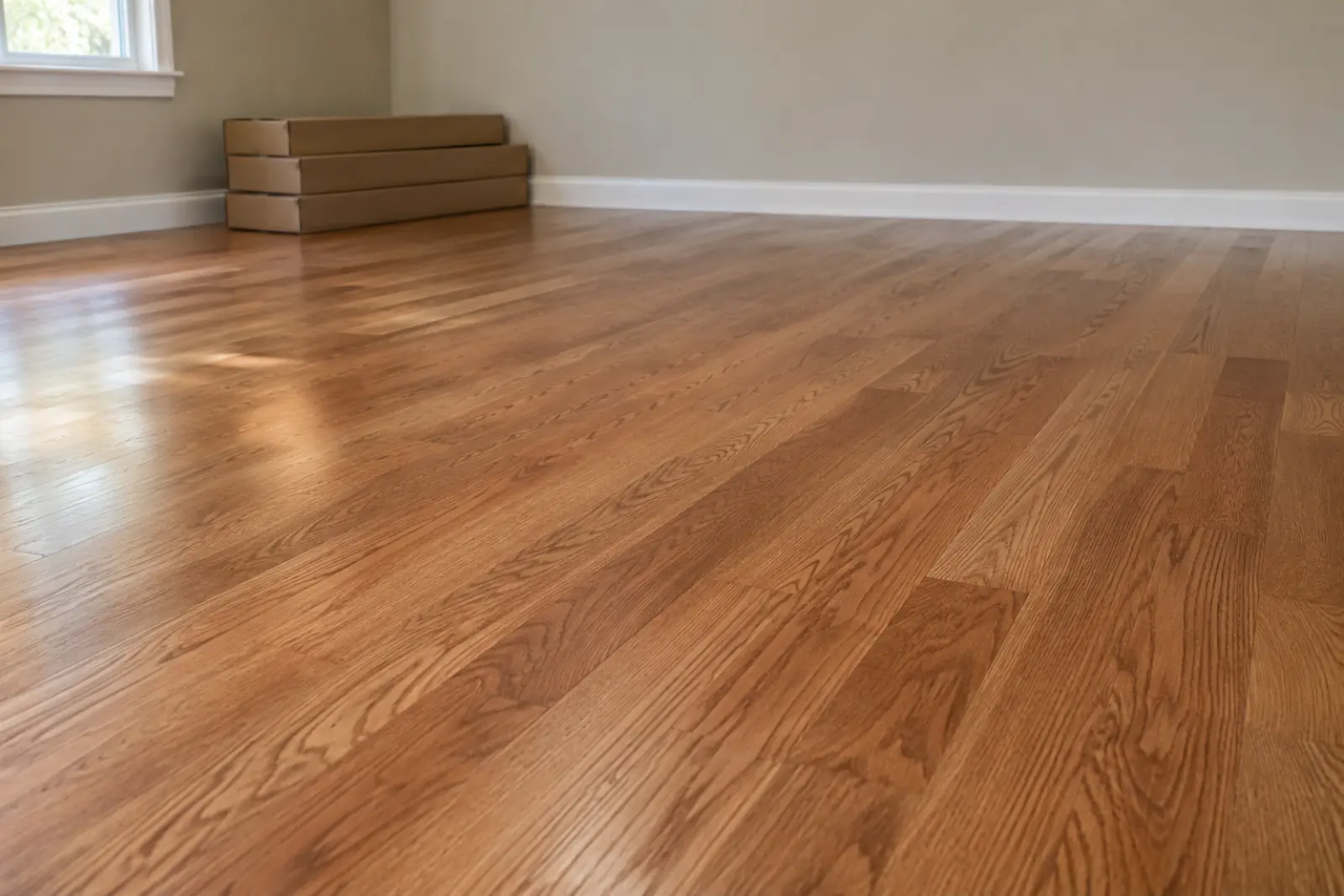
Solid or engineered
Solid hardwood is milled from a single piece, can be sanded and refinished many times, and is usually nailed over a wood subfloor. Engineered hardwood has a hardwood top layer over a stable core, handles humidity swings better and can be installed over more kinds of subfloor. The right choice depends on the room, the subfloor and whether the home is on a slab.
Acclimation and moisture
Wood takes on and gives off moisture with the seasons, and Middle Tennessee summers are humid. Flooring is brought into the house before install so it can settle to indoor conditions, subfloor moisture is checked, and expansion gaps are left at the walls. Skipping those steps is the usual cause of cupping and gapping.
Finishing and repair
Boards can be stained to match existing floors or cabinets, then sealed with a durable finish. Damaged boards can often be replaced rather than the whole floor, and worn floors can be sanded and refinished.
What is included
- Subfloor condition review
- Moisture and acclimation planning
- Solid and engineered comparison
- Transition and threshold layout
- Board replacement assessment
- Finish care discussion
Signs your hardwood floor needs attention
- Boards cup or crown
- Gaps appear between boards
- Finish is worn through
- Floor squeaks underfoot
- Water damaged a limited area
How it works
Inspect the floor and subfloor
The inspection looks beyond the visible surface. Existing boards, subfloor type, flatness, moisture exposure, floor height and transitions are reviewed before a product is selected. For a repair, the inspection also identifies whether the issue is limited to individual boards or connected to a water, subfloor or humidity condition that needs correction first.
Choose the floor system
Solid and engineered hardwood are compared against the room and subfloor rather than treated as competing labels. Solid wood can suit many wood-subfloor installations and offers refinishing potential. Engineered wood can be useful where dimensional stability or a different installation method is needed. Samples help evaluate grain, width, sheen and nearby finishes.
Prepare and install
The installation plan includes subfloor preparation, acclimation, moisture checks and expansion space at walls and fixed objects. Those steps matter because wood responds to its environment after the work is complete. Board direction, thresholds and transitions are laid out before the first row, so the floor reads intentionally through doors and into connected spaces.
Finish and maintain
New or repaired flooring is checked for consistent color, edge detail and clean transitions. The homeowner receives guidance on routine cleaning, furniture protection and how to respond to spills. Refinishing plans also consider dust control, access to the room and the curing needs of the selected finish, not only the sanding itself.
Options compared
Solid hardwood or engineered hardwood
Solid hardwood is milled from a single piece of wood and is often selected for wood-subfloor installations where future sanding is important. Engineered hardwood has a real wood wear layer over a layered core and can offer greater dimensional stability. The decision should follow the subfloor, room conditions, desired board width and the manufacturer requirements for the chosen product.
Refinish the existing floor or replace it
Refinishing can be a practical path when the existing boards are sound and the issue is wear, surface scratches or an outdated color. Replacement may be more appropriate where there is extensive water damage, movement, incompatible repairs or a floor system that cannot support the desired result. Inspection comes before either recommendation because surface appearance alone does not tell the whole story.
What affects the price
Flooring scope depends on the selected material, subfloor preparation, moisture conditions, removal work, layout complexity, transitions and the finish system. An inspection separates surface work from repairs that need attention below the boards.
- Solid or engineered material
- Subfloor repair and preparation
- Room access and furniture removal
- Board width and layout
- Thresholds and adjoining floor transitions
- Sanding, stain and finish system
Hardwood Floors in Murfreesboro
Murfreesboro's Middle Tennessee climate makes indoor moisture management a practical part of any wood-floor decision. The U.S. EPA generally recommends relative humidity of 30 to 50 percent for homes. That guidance does not replace manufacturer instructions, but it helps explain why acclimation and moisture checks belong in the installation sequence.
Rutherford County homes can have different subfloor conditions, including wood framing and slab-based areas, so the product and installation method should follow the actual floor system. A room-to-room measurement also shows where floor heights change and where a threshold or transition needs to protect the edge of the new material.
Why homeowners choose Harmony Homes
Plan the details before materials arrive
90% approximate time people spend indoors
A cabinet run, a casing profile and a floor transition all meet in the same rooms. Planning those decisions together gives each trade a clear starting point. It also makes it easier to spot a conflict, such as a window height that leaves no room for cabinet crown, before material is cut or installed. The EPA notes that people spend approximately 90 percent of their time indoors.
Source: U.S. Environmental Protection Agency
Respect wood and indoor conditions
30 to 50% relative humidity generally recommended for homes
Wood flooring, cabinet parts and trim respond to moisture in the air. The work starts by checking the room, subfloor and planned finish instead of treating every room alike. The U.S. EPA generally recommends indoor relative humidity of 30 to 50 percent, a useful target when planning woodwork and ventilation. It also supports the use of exhaust ventilation in kitchens and bathrooms.
Source: U.S. Environmental Protection Agency
Build for the room that is actually there
90% approximate time people spend indoors
A useful result begins with real walls, real ceiling heights and the way a household uses a space. Measurements guide drawer widths, shelf heights, transitions and trim returns. That approach suits a new house as well as an existing room, where a floor may slope or a wall may be out of square. The details deserve attention because rooms are used every day.
Source: U.S. Environmental Protection Agency
Who this fits
- New builds and additions
- Homes with worn floors that can be refinished
- Kitchens where floor and cabinets should match
- Buyers comparing solid and engineered
Questions about hardwood floors
What causes hardwood boards to cup or gap?
Changes in moisture, water exposure, installation conditions and subfloor problems can all contribute. The first step is to identify whether the boards are responding to a current condition or whether the issue is historical. Repairing a visible board without correcting a moisture source may not solve the underlying problem.
Is engineered hardwood real wood?
Yes. Engineered hardwood has a real hardwood wear layer over a layered core. Its construction can provide dimensional stability in some settings. The relevant comparison is the room, subfloor, installation method and the refinishing potential of the particular product, not just the product name.
Can a damaged section be repaired without replacing the whole floor?
Often, individual boards or a limited area can be replaced if a compatible material and finish can be found. The repair needs to account for the cause of the damage, the age of the existing floor and how the new boards will blend after finishing.
How should hardwood be cleaned after installation?
Use the product manufacturer's care guidance, clean spills promptly and avoid leaving standing water on the surface. Furniture pads and entry mats can reduce wear. Before using a cleaner or refinishing product, confirm it is compatible with the existing finish rather than relying on a general floor-care claim.